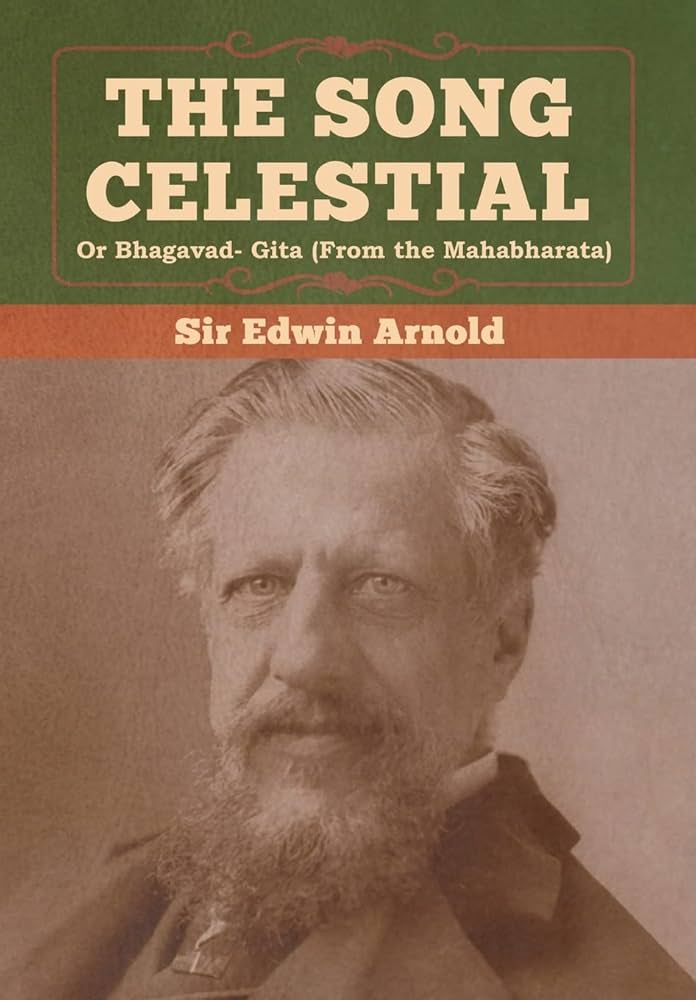
The Song Celestial; Or, Bhagavad-Gîtâ (from the Mahâbhârata)
By Sir Edwin Arnold
"The Song Celestial; Or, Bhagavad-Gîtâ (from the Mahâbhârata)" by Sir Edwin Arnold is a philosophical poem and spiritual discourse, likely written in the late 19th century. The text presents a dialogue between Prince Arjuna, a warrior facing a profound moral dilemma on the battlefield of Kurukshetra, and Krishna, who embodies the Supreme Being and serves as his charioteer. This discourse explores themes of duty, righteousness, and the nature of life and death, seeking to impart wisdom on both personal and cosmic levels. The opening of the work introduces the pivotal moment in which Arjuna surveys the battle and becomes overwhelmed with grief and compassion for his relatives on both sides of the conflict. He articulates his fears and moral concerns about fighting against kinsmen, questioning the purpose and morality of war itself. As he grapples with this turmoil, Krishna responds with profound guidance, urging Arjuna to overcome his doubts and embrace his duty as a warrior, emphasizing the eternal nature of the soul and the importance of righteous action. This sets the stage for the philosophical journey that will unfold throughout the text.
format_quote Synopsis
"The Song Celestial; Or, Bhagavad-Gîtâ (from the Mahâbhârata)" by Sir Edwin Arnold is a philosophical poem and spiritual discourse, likely written in the late 19th century. The text presents a dialogue between Prince Arjuna, a warrior facing a profound moral dilemma on the battlefield of Kurukshetra, and Krishna, who embodies the Supreme Being and serves as his charioteer. This discourse explores themes of duty, righteousness, and the nature of life and death, seeking to impart wisdom on both personal and cosmic levels. The opening of the work introduces the pivotal moment in which Arjuna surveys the battle and becomes overwhelmed with grief and compassion for his relatives on both sides of the conflict. He articulates his fears and moral concerns about fighting against kinsmen, questioning the purpose and morality of war itself. As he grapples with this turmoil, Krishna responds with profound guidance, urging Arjuna to overcome his doubts and embrace his duty as a warrior, emphasizing the eternal nature of the soul and the importance of righteous action. This sets the stage for the philosophical journey that will unfold throughout the text.
"EbookVaultCollection curation board highlights this edition for its exceptional narrative structure and stylistic consistency. Paid members get full access to all future revisions and author notes."

Sir Edwin Arnold
Author
Sir Edwin Arnold is a highly celebrated author whose books have touched readers globally.
Explore bibliography arrow_forward