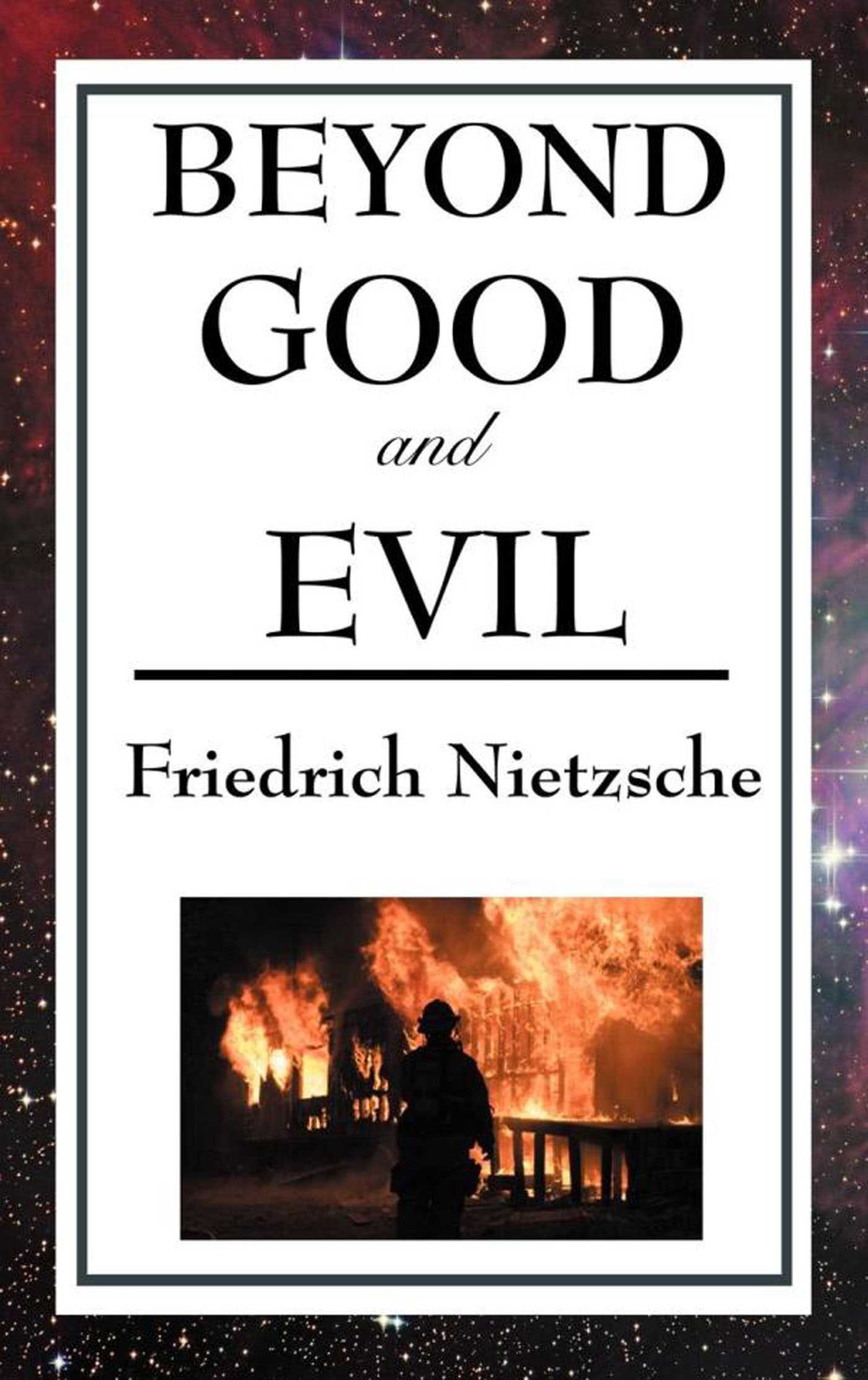
Beyond Good and Evil
By Friedrich Wilhelm Nietzsche
"Beyond Good and Evil" by Friedrich Wilhelm Nietzsche is a philosophical treatise written during the late 19th century. In this work, Nietzsche critiques traditional moral values and explores the complexities of truth, morality, and the nature of human consciousness, arguing against the dogmatic philosophers of the past. He introduces concepts that challenge the conventional dichotomy of good and evil, seeking to understand the underlying drives that shape human behavior and belief systems. The beginning of the book presents Nietzsche's provocative thoughts on the "Will to Truth" and its implications for philosophy. He raises skeptical questions about the very nature of truth and knowledge, suggesting that what is often regarded as "truth" may actually be a product of deeper instincts and motivations. Nietzsche critiques the philosophers for their blind adherence to dogmatic principles, encouraging a more nuanced and existential understanding of morality, one that acknowledges the intricate web of desires and power dynamics at play. Through his contemplative and often confrontational prose, he sets the stage for a re-evaluation of how we perceive virtue, knowledge, and the essence of existence itself.
format_quote Synopsis
"Beyond Good and Evil" by Friedrich Wilhelm Nietzsche is a philosophical treatise written during the late 19th century. In this work, Nietzsche critiques traditional moral values and explores the complexities of truth, morality, and the nature of human consciousness, arguing against the dogmatic philosophers of the past. He introduces concepts that challenge the conventional dichotomy of good and evil, seeking to understand the underlying drives that shape human behavior and belief systems. The beginning of the book presents Nietzsche's provocative thoughts on the "Will to Truth" and its implications for philosophy. He raises skeptical questions about the very nature of truth and knowledge, suggesting that what is often regarded as "truth" may actually be a product of deeper instincts and motivations. Nietzsche critiques the philosophers for their blind adherence to dogmatic principles, encouraging a more nuanced and existential understanding of morality, one that acknowledges the intricate web of desires and power dynamics at play. Through his contemplative and often confrontational prose, he sets the stage for a re-evaluation of how we perceive virtue, knowledge, and the essence of existence itself.
"EbookVaultCollection curation board highlights this edition for its exceptional narrative structure and stylistic consistency. Paid members get full access to all future revisions and author notes."

Friedrich Wilhelm Nietzsche
Author
Friedrich Wilhelm Nietzsche is a highly celebrated author whose books have touched readers globally.
Explore bibliography arrow_forward